“Hey gidi Küheylan, koşmana bak sen!” — Necip Fazıl Kısakürek, “Utansın”
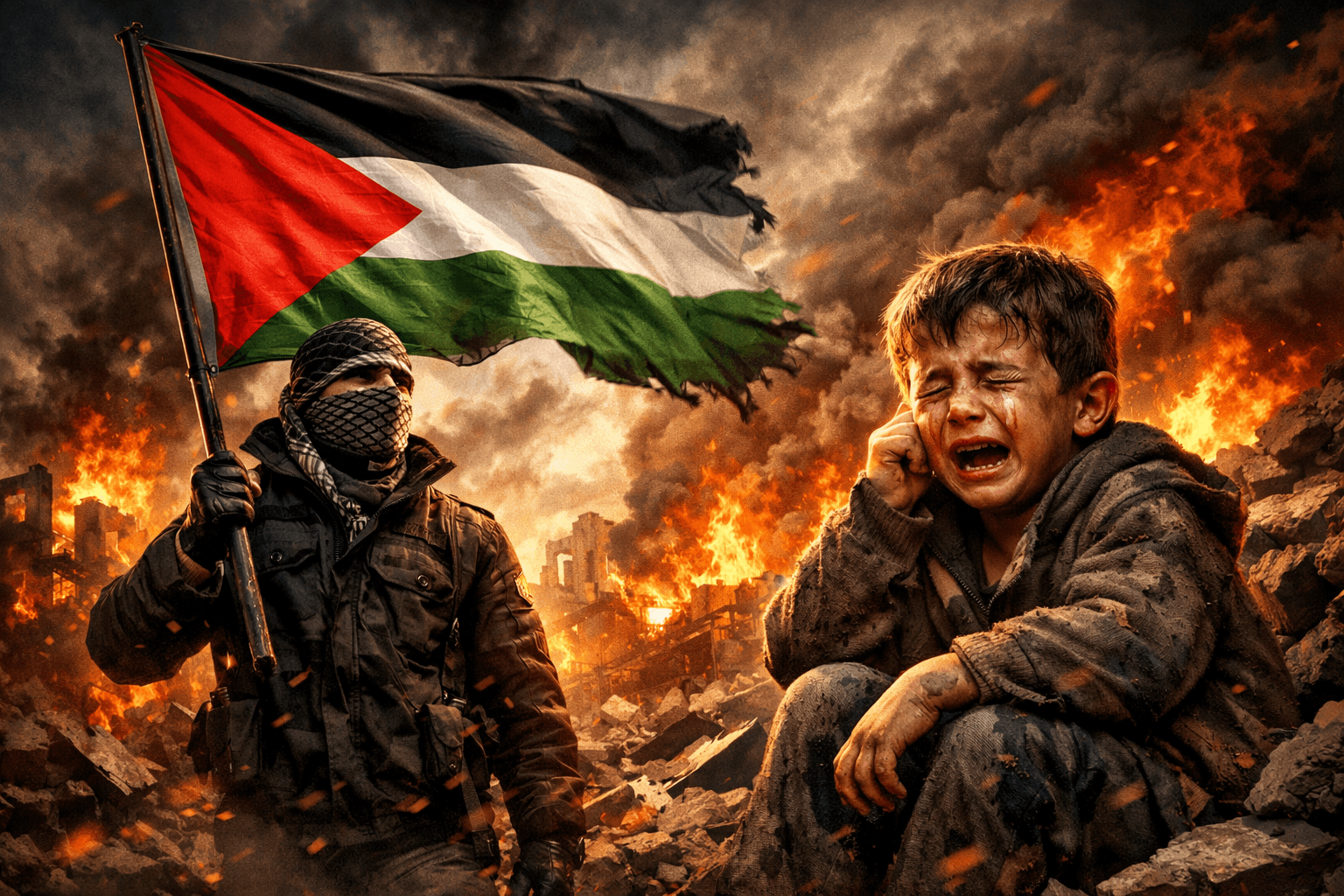
There are some tragedies so large that they do not stay on the screen. They cross the border of the news and enter the conscience. Palestine is one of those tragedies for me.
What is happening to Palestinians is not something I can watch from a safe moral distance and simply call “sad.” It feels heavier than that. It feels like a wound that keeps asking a question: How can so much suffering continue in front of the whole world, and how can I still go on with ordinary life?
That question has turned into another one inside me: Why do I blame myself for something I did not create and cannot stop alone?
I think the answer is this: because conscience does not only react to what we do; it also reacts to what we fail to prevent, what we grow used to, and what we slowly normalize. When children are buried under rubble, when families are displaced again and again, when hunger, fear, and humiliation become daily conditions of life, the soul rejects indifference. By early April 2026, UNRWA, citing Gaza’s Ministry of Health as reported by OCHA, said 72,289 Palestinians had been killed in Gaza since 7 October 2023; OCHA also reported continued killings and injuries even after the October 2025 ceasefire announcement.
Many people use the word genocide for Gaza not as a slogan, but as a legal and moral accusation they believe the evidence supports. In September 2025, the UN Independent International Commission of Inquiry said Israel had committed genocide in Gaza. In March 2026, UN experts said that “genocide continues in Gaza.” At the same time, the ICJ case brought by South Africa remains ongoing, and the Court has already issued provisional measures related to the Genocide Convention.
And that is where the guilt becomes complicated.
I know, rationally, that I am not the one dropping bombs. I am not drafting policies. I am not blocking aid. I am not deciding who lives under siege and who speaks of “security” from a podium. But still, I feel implicated by belonging to a world that has seen enough, knows enough, and yet allows the machinery of destruction to continue. The guilt is not always personal guilt. Sometimes it is human guilt. Sometimes it is the shame of witnessing. Sometimes it is the shame of returning to comfort while others remain trapped in horror.
The Red Cross described Gaza in October 2025 as a place where “humanity [has been] hollowed out,” and in early 2026 it continued warning that access to people in need in Gaza remained critically restricted. Those phrases matter because they name something many of us feel but struggle to say: when mass suffering becomes routine, humanity itself is degraded.
Still, guilt alone is not enough. In fact, guilt can become another form of paralysis.
If I remain in self-blame only, then my emotions serve no one. Palestine does not need my private despair more than it needs public honesty, material solidarity, and moral courage. The point is not to ask, “How can I stop feeling bad?” The point is to ask, “What can I do so that my pain becomes useful?”
We cannot all stop a war. But that does not mean we can do nothing.
We can speak when silence is easier.
We can refuse language that hides suffering behind sterile phrases.
We can donate to credible humanitarian organizations working on food, shelter, healthcare, and emergency relief.
We can support journalists, scholars, medics, and human rights groups documenting what many would rather erase.
We can call, write, organize, boycott where we are persuaded it is effective, pressure institutions, challenge propaganda, and keep Palestine present when the world tries to move on.
We can teach our children that some lives are not disposable.
We can pray, if we are people of prayer, and act, if we are people of action. Ideally, we do both.
And maybe just as importantly, we can resist the lie that unless we can do everything, what we do means nothing.
That lie is one of the engines of modern helplessness.
History is not changed only by presidents, armies, and courts. It is also changed by whether ordinary people withdraw into comfort or insist on remaining morally awake. Every campaign, every protest, every donation, every testimony, every article, every refusal to look away is small in isolation. But moral collapse also happens one silence at a time. So does moral resistance.
That is why those poetic lines stay with me.
From Akıncılar, I hear movement, urgency, a refusal of passivity. From the Küheylan line in Necip Fazıl, I hear a rebuke against weakness of will, against failing to run when one must run. Not because poetry can stop missiles, but because poetry can still rescue the human being from numbness. It can remind us that dignity requires motion.
So yes, I blame myself sometimes.
Not because I caused this.
But because I never want to become the kind of person who can live beside such devastation without being changed by it.
If my guilt has any value, it must become responsibility.
If my grief has any value, it must become solidarity.
If my words have any value, they must stand with the oppressed and not merely circle around my own sadness.
Palestine is not a trend.
It is not a debate format.
It is not a temporary headline.
It is a test of what the world means when it speaks of human rights, justice, law, and mercy.
And it is a test of us too.